

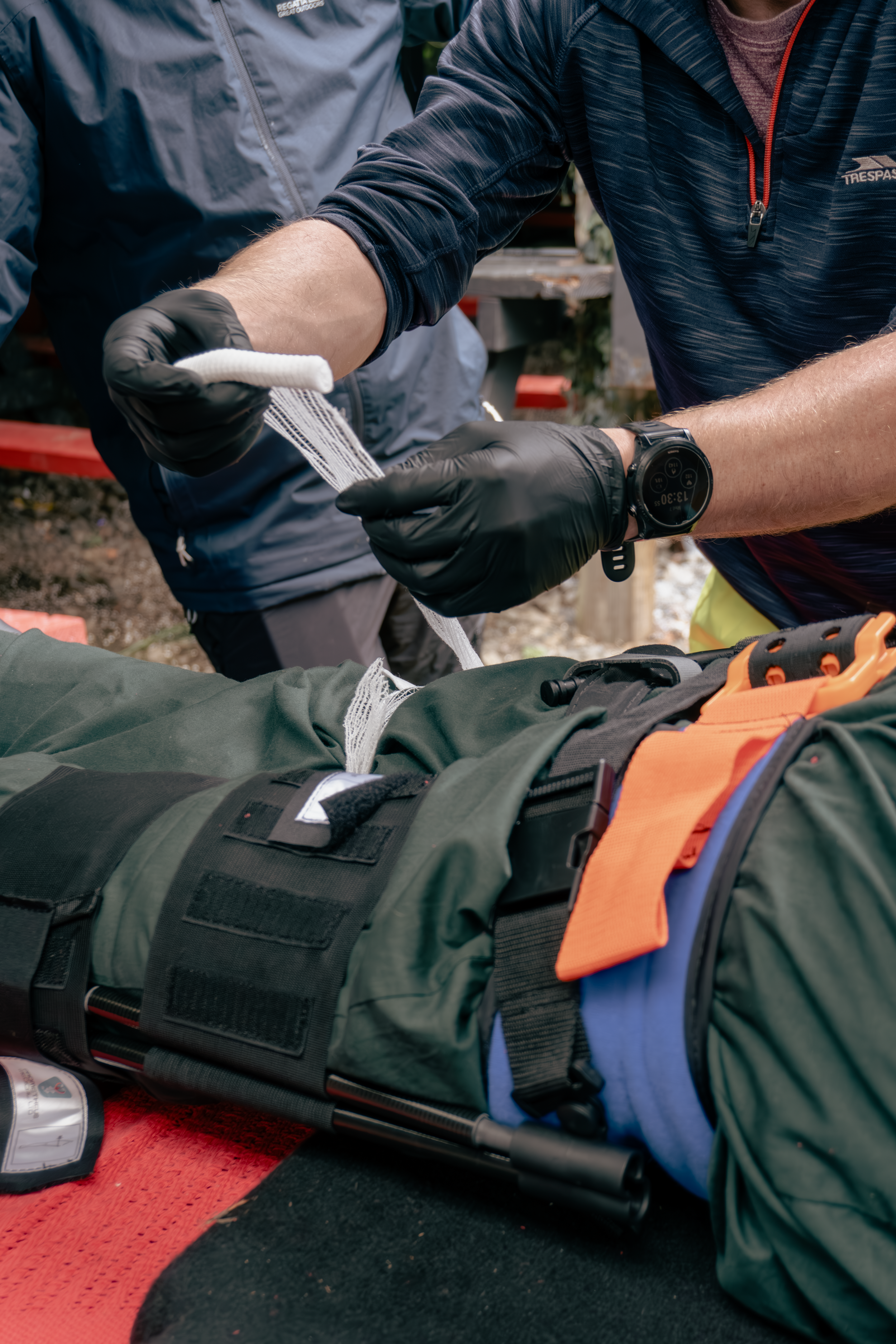

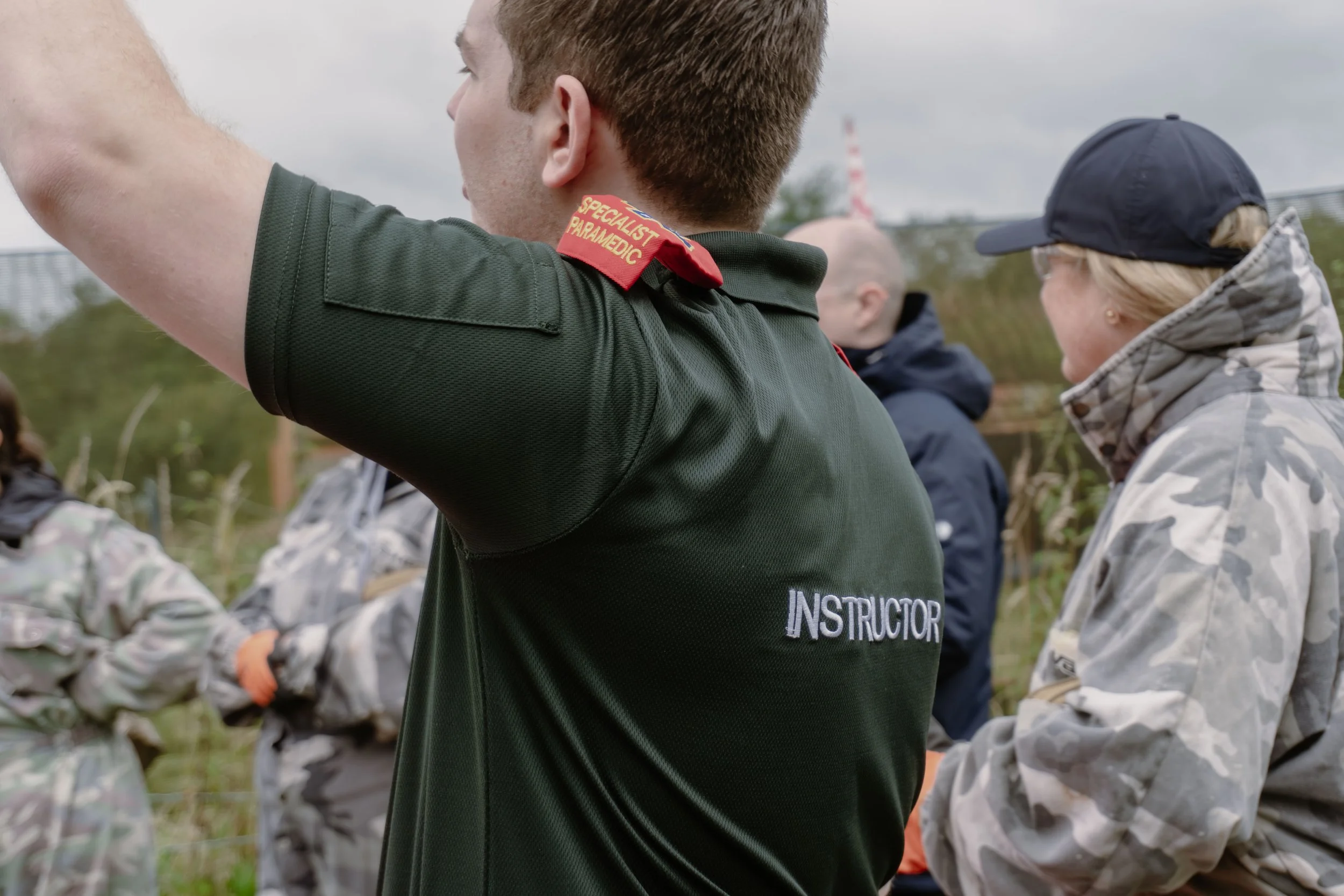
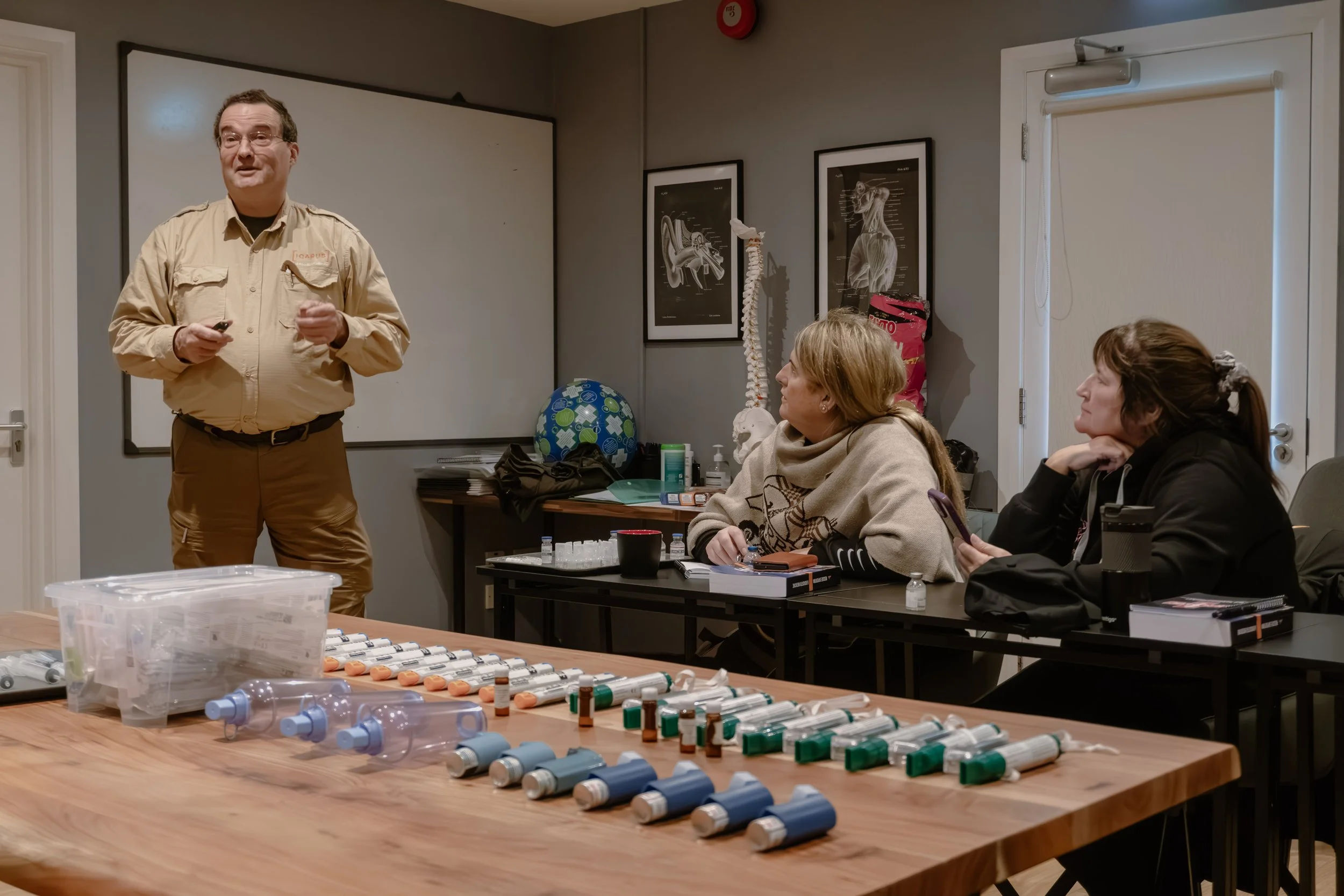
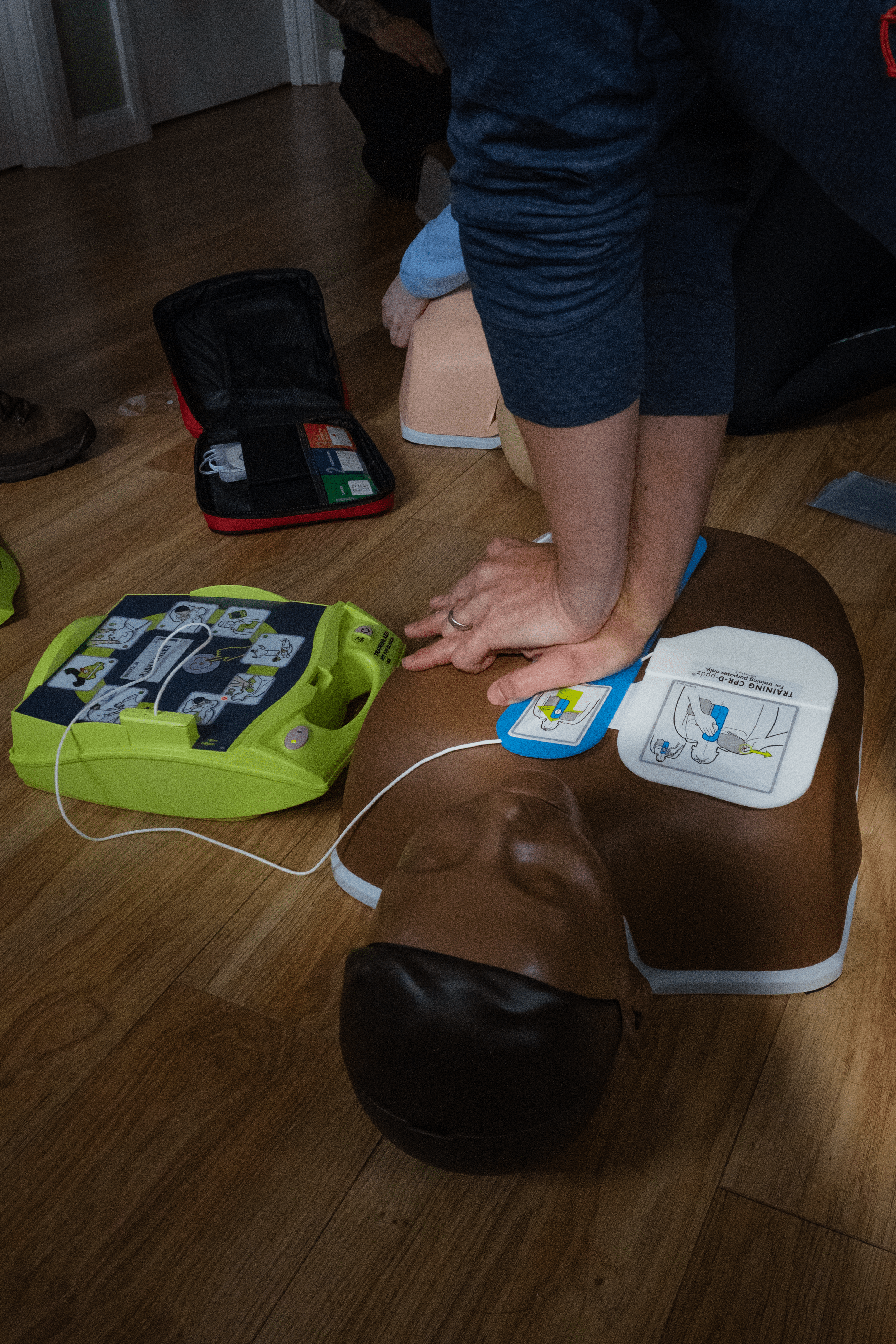
K2 International is a family-run medical training centre and emergency equipment supplier based in Randalstown, Northern Ireland.
We provide internationally recognised first aid, pre-hospital and emergency care courses for individuals, businesses, community groups and healthcare professionals. Our training is practical, realistic and delivered by experienced clinicians with real-world experience in Northern Ireland and across the world.
Alongside our training centre, we operate an online store supplying everything from refillable first aid kits and routine workplace consumables through to professional pre-hospital, ambulance and emergency response equipment.
K2 International
EDUCATION • OPERATIONS • CONSULTANCY
Featured Products
Description:
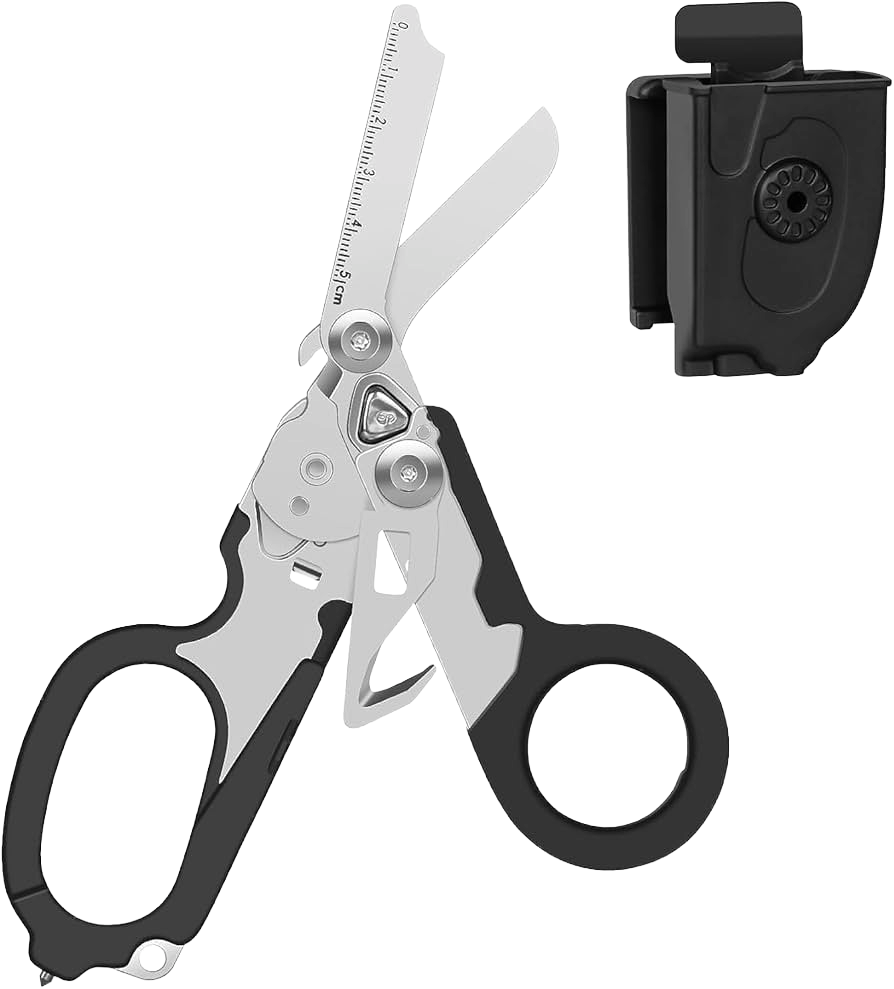
The 6-in-1 Folding Trauma Shears are ideal for first aid, ambulance, pre-hospital and emergency response settings where a compact, practical cutting tool is required.
These stainless steel folding shears are designed to provide multiple useful functions in one easy-to-carry tool, making them a handy addition to first aid kits, response bags, ambulance pouches, outdoor kits and event medical setups.
They are suitable for cutting clothing, dressings, bandages, tape and other light materials during patient assessment, treatment and equipment preparation. Their folding design helps save space while still keeping an essential emergency tool close to hand.
Important Information:
6-in-1 folding trauma shear style multitool
Stainless steel construction
Compact folding design
Suitable for first aid, ambulance and pre-hospital response bags
Useful for cutting clothing, dressings, bandages, tape and light materials
Easy to store in pouches, kits or grab bags
Suitable for first aiders, first responders, event medics, ambulance staff and outdoor responders
Designed as a practical emergency response accessory
Users should be trained and competent in the safe use of any equipment carried as part of a first aid or pre-hospital response kit



Description:
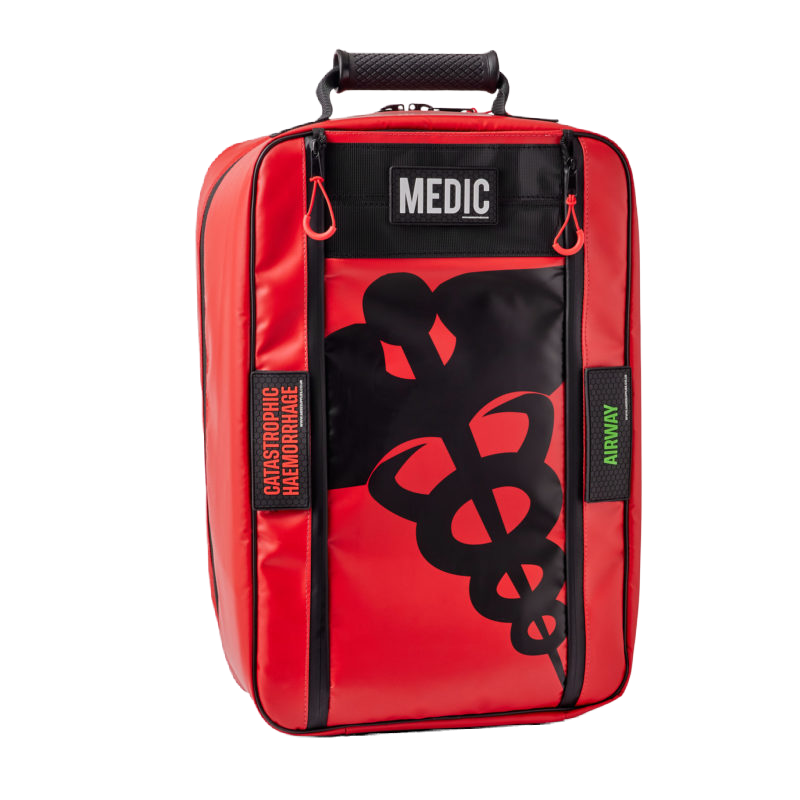
The W1 Response Bag by MERE is a durable, IPC-friendly lifesaving essential with oxygen-carrying capability and a 100kg winch-tested D-ring for secure aircraft loading. Made from wipeable PVC material, it features a quick access front panel and colour-coded pouches for rapid, organised emergency response. Available in four stylish colours, the W1 Response Bag combines functionality and sleek design, ready for any critical situation.
What’s Included?
M1 Response Bag
MERE Patches (Catastrophic Haemorrhage, Airway, Breathing, Circulation, Medication, Hypothermia, Diagnostics, Minor Injuries, MEDIC Patch)
All inner pouches
Oxygen carrying internal straps
Options Available:
Black
Red
Blue
Green
Other patch options are available for the inner pouches, contact us for your preferred layout/patch configuration
Description:
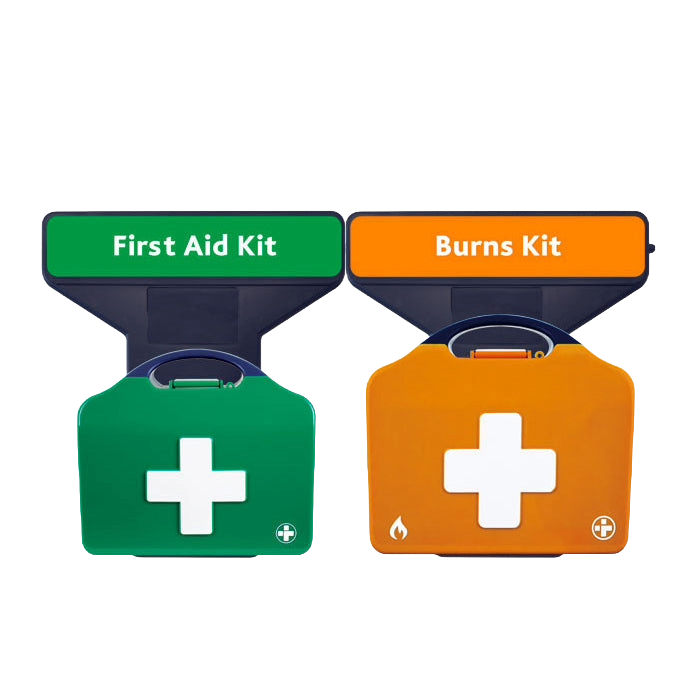
The modular, sustainable, space saving, first aid solution.
Aurapoint provides a convenient, compliant selection of first aid kits incorporating an easy to install wall bracket system. The range ensures everything needed to meet workplace regulatory requirements in one simple modular solution.
Important Information:
Contains:
1 x Aurapoint Base (incl. labels and AED bracket).
1 x 427 Large BS8599-1 Catering First Aid Kit
1 x 3350 Burns Kit

Description:
Stay cozy and stylish with the K2 International Half-Zip Fleece, designed for comfort and durability. Made from 100% polyester, this fleece jacket offers superior warmth without the weight. Featuring the iconic K2 International crest on the front, it’s the perfect way to represent your brand while enjoying premium comfort.
Crafted by MFC Sports, this versatile half-zip fleece is perfect for layering in cooler weather or as a stand-alone piece for everyday wear. Whether you're heading out for a hike, lounging at home, or representing your brand on the go, this fleece is a must-have for any K2 International fan.
Important Information:
Made from 100% polyester for ultimate softness and warmth
MFC Sports craftsmanship for quality and durability
Classic half-zip design for adjustable comfort
K2 International logo prominently displayed
Perfect for both outdoor adventures and casual wear
Order yours today and experience the perfect blend of comfort, style, and quality with K2 International!
NB: As these jackets are made to order, there is a 4 to 6 week turnaround time for them.
upcoming courses

NB: Applications for Cohort 1, commencing January 2027, are now open. Only 5 places remain as of 15th September 2026.
Application Instructions:
Click APPLY NOW.
Complete the initial assessment form.
Proceed to checkout. An automatic discount will be applied, reducing the application fee payable to £100.
Pay the £100 application fee to submit your application.
The application fee includes your Enhanced AccessNI background check, suitability interview and RPL assessment and mapping, where applicable.
Please note: The £100 application fee is non-refundable.
Following completion of the application process, successful applicants will receive a formal offer of enrolment, together with confirmation of their applicable tuition fees based on the outcome of any RPL assessment.
What is the APEX-6 Paramedic Pathway?
The APEX-6 Paramedic Pathway is a two-phase paramedic education pathway developed and delivered collaboratively by the College of Remote and Offshore Medicine (CoROM) and K2 International (K2i).
The pathway is structured across three progressive years of education and training, with each phase taking no more than 18 months to complete. It combines advanced practical education, classroom-based learning, structured e-learning and supervised clinical practice to provide a progressive route towards the BSc Remote Paramedic Practice.
Phase 1 comprises Year 1 and the first half of Year 2 of the 3-Year Pathway. During this phase, learners complete the practical and classroom-based components of the pathway in Northern Ireland, alongside structured e-learning and supervised clinical practice placement.
Following successful completion of Phase 1, eligible learners progress through Recognition of Prior Learning (RPL) into Phase 2, which comprises the second half of Year 2 and Year 3 of CoROM's BSc Remote Paramedic Practice. The remaining academic components are delivered predominantly online by CoROM, alongside any remaining supervised clinical practice placement requirements.
Across the three years:
Year 1 focuses on emergency, urgent and remote care, supported by substantial supervised clinical practice.
Year 2 develops advanced tropical, austere, remote and expeditionary medicine capability supported by clinical practice placement.
Year 3 progresses into specialist remote paramedic practice, clinical practice placement, research and dissertation-level work.
The structure below provides a summary of the pathway. For a more detailed breakdown of individual modules, learning hours and assessment requirements, please visit: www.k2i-eoc.com/apex-paramedic-practice
Phase 1: Northern Ireland Based Delivery
Phase 1 comprises Year 1 and the first half of Year 2 of the APEX-6 Paramedic Pathway.
The programme has been jointly developed by CoROM and K2 International and is co-delivered by experienced paramedics, advanced paramedics and doctors from both organisations, with all face-to-face teaching taking place at K2 International's training facility in Randalstown, Northern Ireland.
Phase 1 brings together the practical, clinical and classroom-based education required to develop learners from emergency and urgent care practice through to advanced paramedic-level clinical decision making, with particular emphasis on remote, austere, prolonged and expeditionary environments.
The learning and assessment within Phase 1 has been developed against the relevant learning outcomes and academic requirements of the BSc Remote Paramedic Practice. It represents approximately the first 18 months of the overall three-year pathway and is designed to constitute approximately 50% of the academic credit required for the degree through CoROM's formal RPL process.
Teaching includes practical skills development, simulation, classroom education, structured e-learning, formal assessment and supervised clinical practice.
Successful completion of the relevant Phase 1 requirements leads to the award of APEX-6, jointly issued by CoROM and K2 International, before eligible learners progress into Phase 2.
Phase 1 Summary
Year 1 - First 12 months
Classroom guided learning: 275 hours
6 x 5-day teaching weeks
Monday to Friday
0900 to 1700
Each week will be delivered sequentially once dates are announced
Online guided e-learning: 361 hours
Clinical placement: 750 hours
Total learning hours: 1,386 hours
Successful completion of all Year 1 modules and assessments within 12 months will lead to the award of:
Level 5 Austere, Prolonged and Expeditionary Care (APEX-5) awarded by K2 International (currently pending Royal College of Surgeons accreditation)
Level 5 Diploma in First Response Emergency and Urgent Care (FREUC 5), jointly awarded by K2 International and Qualsafe Awards
Learners may choose to exit the pathway at this point if their professional goal is to practise at EMT level.
Year 2 - First half
Classroom guided learning: 160 hours
4 x 5-day teaching weeks
Monday to Friday
0900 to 1700
Online guided e-learning: 594 hours
Clinical placement: 187.5 hours
Total learning hours: 941.5 hours
Successful completion of the relevant practical, academic and assessment requirements across Year 1 and the first half of Year 2 leads to the award of:
Level 6 Austere, Prolonged and Expeditionary Care (APEX-6), jointly issued by CoROM and K2 International
Eligible learners may then progress into Phase 2.
Phase 2: BSc Remote Paramedic Practice
Phase 2 comprises the second half of Year 2 and the whole of Year 3.
Following successful completion of Phase 1, eligible learners progress through K2 International-sponsored enrolment and CoROM's formal Recognition of Prior Learning process into the remaining components of the BSc Remote Paramedic Practice.
The learner's APEX-6 certificate and associated evidence of learning will be submitted to CoROM through its formal RPL process. Subject to successful RPL, approximately 50% of the BSc Remote Paramedic Practice credit requirement, equivalent to approximately 18 months of the programme, will be recognised as prior learning.
CoROM and K2 International have jointly developed and agreed the RPL mapping for APEX-6 against the relevant components of the BSc Remote Paramedic Practice. K2 International will sponsor the associated RPL process for learners progressing through the APEX-6 Paramedic Pathway, with the relevant learning and assessment evidence having been specifically designed and mapped for this purpose.
Eligible learners then complete the remaining components of the BSc Remote Paramedic Practice directly through CoROM. These predominantly consist of theoretical and academic modules delivered through structured e-learning, including research, together with the remaining supervised clinical practice placement requirements.
Phase 2 Summary
Year 2 - Second half
Online guided e-learning: 872 hours
Clinical placement: 187.5 hours
Total learning hours: 1059.5 hours
Year 3
Guided e-learning: up to 1500 hours (1000 hours minimum)
Clinical placement: 375 hours
Total learning hours: 1375 to 1875 hours (dependant on elective module selection)
This structure allows learners to complete the required face-to-face practical and classroom education for the pathway in Northern Ireland before completing the remaining academic components of the BSc predominantly online through CoROM.
Successful completion of all required academic modules, assessments, clinical practice hours, portfolio requirements and other programme requirements leads to the award of the BSc Remote Paramedic Practice by CoROM.
Placement
Each year of the APEX-6 Paramedic Pathway includes a minimum number of supervised clinical practice placement hours which must be completed in order to progress. A summary of the placement requirement for each year is provided below:
Year 1: 750 hours. These hours may be completed as part of an operational ambulance crew, meaning the learner may be able to undertake paid employment while completing placement hours, or on a supernumerary / “third manning” basis, which is more likely to be unpaid.
Year 2: 375 hours. These hours must be completed on a supernumerary or “third manning” basis and are therefore likely to be unpaid.
Year 3: 375 hours. These hours must be completed on a supernumerary basis within a resource-limited environment.
K2 International currently has MOUs in place with two potential placement providers:
Elite EMS, Tamworth, England. Elite EMS is a private ambulance provider delivering frontline 999 ambulance services. Elite EMS has agreed to consider K2 International students for paid employment as Emergency Care Assistants, allowing eligible learners to complete relevant Year 1 placement hours as part of an operational crew. This route is subject to successful completion of Level 3 CERAD, an Elite EMS interview and their normal recruitment, onboarding and employment requirements.
Global Medical Projects, Guadalajara, Mexico. Global Medical Projects provides clinical placements for trainee EMTs and Paramedics with Green Cross services in Guadalajara. The ambulance station covered by this arrangement is based alongside an Emergency Department, allowing learners to gain additional clinical exposure within a high-volume ED when ambulance demand is low. This placement option does not require Level 3 CERAD. Any fees, travel, accommodation and other costs associated with the placement are the learner’s responsibility. Further information can be found by clicking here.
NB: Learners may arrange their own clinical placement, provided the proposed placement provider and clinical setting have been vetted and approved by K2 International in advance.
Across the full three-year programme, learners must complete a minimum of 1,500 hours of supervised clinical practice. Placement hours must meet the following requirements:
A minimum of 750 hours must be completed on an emergency ambulance responding to 999, 911 or 112 calls under the authority of, or through a contract with, a statutory ambulance or emergency medical service, such as an NHS Ambulance Service or appropriate international equivalent.
A minimum of 375 hours must be completed within a resource-limited environment. These hours must be completed during Year 3 of the programme and may overlap with other approved placement categories, including emergency ambulance practice.
A maximum of 400 hours may be completed within unscheduled or urgent care settings, including:
Emergency Departments;
GP surgeries or primary care services;
Minor Injury Units;
Urgent Treatment Centres.
A maximum of 150 hours may be completed within specialist care settings, including:
Obstetrics and Gynaecology;
Coronary Care Units;
Operating Theatres;
Geriatric or Older People’s Services;
Palliative and End-of-Life Care services.
A maximum of 150 hours may be completed within approved in-hospital clinical settings, including:
Acute Medical Assessment Units;
High Dependency Units;
Appropriate inpatient wards or specialist hospital clinics.
The resource-limited placement requirement forms part of the overall 1,500-hour clinical placement requirement and is not additional to it.
All placement hours must be completed under appropriate clinical supervision and governance, with the learner supervised by a suitably qualified and professionally registered healthcare professional. K2 International reserves the right to determine whether a proposed placement setting, supervisor or activity is appropriate for the learning outcomes of the programme.
Admission and Compliance
Applicants must complete the required admissions and compliance processes before commencing the APEX-6 Paramedic Pathway and before undertaking clinical placement. These requirements may include:
Formal interview
Identity and eligibility verification
Enhanced criminal background checks, including AccessNI where applicable
Occupational health screening
Exposure-prone procedure declarations
Vaccination and immunisation record checks
Evidence of fitness to undertake clinical practice
Placement documentation
Insurance declarations
Safeguarding requirements
Any other compliance checks required by CoROM, K2 International, placement providers or relevant regulatory bodies
Progression into Phase 2 remains subject to CoROM's admissions, compliance, onboarding, enrolment and professional suitability requirements.
K2 International cannot accept responsibility for an application being refused on grounds specific to an individual learner, including criminal records, safeguarding concerns, professional conduct, occupational health requirements, fitness to practise, identity or eligibility issues, or any other matter that may prevent the learner from meeting CoROM's enrolment or clinical placement requirements. Possession of an APEX-6 certificate does not override these requirements.
The pathway and associated RPL arrangements also remain subject to the continuing quality assurance and regulatory requirements of CoROM and K2 International. Programme structure, credit recognition or progression requirements may therefore be reviewed or amended where necessary to maintain academic standards, regulatory compliance and appropriate equivalence.
Who are CoROM?
The College of Remote and Offshore Medicine Foundation, known as CoROM, is a non-profit higher education institution based in Malta specialising in remote, offshore, austere, tropical and resource-limited healthcare education. CoROM operates under licence from the Malta Further and Higher Education Authority (MFHEA), licence number 2018-022.
CoROM's degree programmes are designed to meet the standards of the Malta Qualifications Framework (MQF) and European Qualifications Framework (EQF), placing them within recognised European higher education level structures.
CoROM is also listed in the World Higher Education Database (WHED), maintained by the International Association of Universities in collaboration with UNESCO. WHED is used internationally by universities, employers, governments and credential evaluation agencies to verify recognised higher education institutions.
For UK learners, MQF and EQF alignment can support qualification comparison and academic recognition discussions. International qualifications are considered by individual universities, employers, professional bodies and regulators according to their own requirements and may also be compared against UK qualification levels through recognised qualification comparison routes such as UK ENIC.
CoROM's academic provision includes undergraduate and postgraduate study in remote, austere and offshore medicine, including the BSc Remote Paramedic Practice.
Entry Requirements
Applicants must meet the following entry requirements before commencing the APEX-6 Paramedic Pathway:
Be at least 18 years old on the first day of the programme.
Hold a valid Level 3 Certificate in First Response Emergency Care (FREC 3), or recognised equivalent.
Hold a valid Level 4 Certificate in First Response Emergency Care (FREC 4), or recognised equivalent.
Be willing and able to complete supervised clinical practice placement, including international placement where required (NB: international placement is mandatory in Year 3) or where this forms part of the agreed placement pathway.
Be able to meet the physical, professional and practical requirements of emergency, urgent, remote and austere care training, including scenario-based learning, clinical skills assessment and supervised placement activity.
Be able to communicate effectively in written and spoken English.
Be willing to complete all required criminal background checks, occupational health declarations, placement documentation, insurance declarations and safeguarding requirements.
Assessment
APEX-6 is assessed through a combination of:
Objective Structured Clinical Examinations (OSCEs)
Practical skills assessments
Invigilated written examinations
Online assessments
Academic and professional portfolios
Essays and written assignments
Clinical reflections
Supervised clinical placement evidence
Dissertation-level project work
Although APEX-6 is not delivered by K2 International as a traditional university programme, learners are expected to work to a high academic and professional standard. Assessment is designed to demonstrate clinical knowledge, applied competence, reflective practice, clinical reasoning and safe decision making within remote, austere and expeditionary healthcare environments.
Flexible Exit Points and Progression
The APEX-6 Paramedic Pathway is designed as a progressive three-year route, but learners are not required to complete all three years if their professional goals do not require progression to the BSc Remote Paramedic Practice.
Learners who successfully complete Year 1 may exit with:
Level 5 Diploma in First Response Emergency and Urgent Care (FREUC 5)
Level 5 Austere, Prolonged and Expeditionary Care (APEX-5)
These awards remain subject to successful completion of all relevant learning, assessment, placement and awarding requirements.
Learners wishing to progress to the full BSc Remote Paramedic Practice must complete Phase 1 and Phase 2, including all required academic modules, clinical placement, practicum, portfolio, assessment and dissertation requirements.
Recognition of Prior Learning
Recognition of Prior Learning may be available to suitably qualified and experienced applicants. All RPL applications are considered individually and remain subject to formal assessment, approval by the relevant academic institution, awarding organisation or responsible body, and payment of any applicable RPL fees.
EMT qualifications vary considerably in academic level, content, clinical exposure and scope of practice. APEX-6 has therefore been designed to accommodate RPL where applicants can demonstrate prior learning that is sufficiently equivalent to specific elements of the programme.
The following pathways represent RPL arrangements that are either currently confirmed or under development:
Level 3 EMT Qualification (No RPL available)
Candidates holding a Level 3 EMT qualification must complete an appropriate Level 4 qualification, such as FREC 4 or an accepted equivalent, before commencing APEX-6. However, candidates with sufficient evidence of current and relevant clinical practice will be exempted from all of the Year 1 clinical placement hours requirement. Evidence of ongoing clinical practice and continuing professional development will still be required throughout the Year 1 registration period.
Level 3 qualifications, whether held individually or in combination, will not provide sufficient evidence of academic equivalence to the Level 5 or Level 6 learning outcomes within APEX-6. No exemption from APEX-6 modules is therefore currently allowed on the basis of Level 3 qualifications or experience alone.
No fees will be deducted for applicants using this pathway.
Level 4 EMT Qualification (Practice placement hours RPL available)
Candidates holding an appropriate Level 4 EMT qualification will be required to complete the full APEX-6 programme.
Candidates must complete the associated classroom teaching and structured e-learning to ensure that the required Level 5 academic knowledge, skills and assessment outcomes have been formally demonstrated.
Candidates with sufficient evidence of current and relevant clinical practice will be exempted from all of the Year 1 clinical placement hours requirement. Evidence of ongoing clinical practice and continuing professional development will still be required throughout the Year 1 registration period.
No fees will be deducted for applicants using this pathway.
Level 5 EMT Qualification (RPL of first 15 days available)
Candidates holding an appropriate Level 5 EMT qualification may be eligible to enter APEX-6 during the latter part of Year 1.
Candidates whose Level 5 EMT qualification was not delivered by K2 International will be required to attend the final 20 taught days of Year 1, allowing them to omit the first 15 taught days subject to successful RPL assessment.
This period allows candidates to complete the APEX and Paramedic Practice specific learning and assessment required before progressing into Year 2.
£3000 will be deducted for applicants using this pathway.
K2 International Level 5 EMT Qualification (RPL of first 20 days available)
Candidates whose Level 5 EMT qualification was delivered by K2 International will be required to attend the final 15 taught days of Year 1, allowing them to omit the first 20 taught days subject to successful RPL assessment.
This period allows candidates to complete the Paramedic Practice specific learning and assessment required before progressing into Year 2.
£4000 will be deducted for applicants using this pathway.
All advanced-entry arrangements remain subject to verification of qualifications, individual RPL assessment and the requirements of the relevant academic or awarding body.
Who is the APEX-6 Paramedic Pathway for?
APEX-6 is designed for clinicians who want to progress from ECA-level practice through EMT-level education and towards paramedic-level remote, austere, tropical, expeditionary and resource-limited healthcare practice. It may be particularly suitable for those operating, or intending to operate, in:
Pre-hospital emergency and urgent care
Private ambulance services
Event medical cover
Close protection medical support
Offshore medicine
Expedition medicine
Humanitarian or international healthcare
Remote site medical support
Security and hostile environment medical support
Remote, austere or resource-limited healthcare
Higher-level paramedic or specialist medical education
The APEX-6 pathway can also support progression towards NHS ambulance service roles, subject to completion of Health and Care Professions Council (HCPC) registration via the international application route discussed below.
Academic Award and Professional Recognition
The APEX-6 Paramedic Pathway combines practical training, supervised clinical experience and structured academic study across two phases. The progression route is:
Apply for APEX-6 and complete the required admissions and compliance checks.
Complete Year 1 and the first half of Year 2 through Phase 1 with K2 International.
Receive Level 6 Austere, Prolonged and Expeditionary Care from K2 International and CoROM.
Use APEX-6 to progress through CoROM's formal Recognition of Prior Learning, admissions and enrolment processes sponsored by K2 International.
Complete the second half of Year 2 and Year 3 through CoROM.
Receive the BSc Remote Paramedic Practice from CoROM.
APEX-6 has been developed and mapped for Recognition of Prior Learning against relevant components of CoROM's BSc Remote Paramedic Practice, representing approximately 50% of the degree and 90 academic credits.
The BSc Remote Paramedic Practice is an academic degree. Graduates may use the degree, clinical placement evidence, academic credits and professional portfolio to support applications to relevant professional regulators, including the Health and Care Professions Council (HCPC) in the UK through the international application route.
Neither K2 International nor CoROM can guarantee the outcome of any professional registration or international recognition application. Thus candidates remain responsible for completing the relevant application process, providing all required documentation and evidence, and demonstrating that they meet the requirements of their chosen professional regulator.
As of October 2026, no graduate of the BSc Remote Paramedic Practice that has applied for UK Paramedic registration has failed to gain entry onto the HCPC register.
Fees and Payment Options
The standard tuition fee for the APEX-5 programme is £27,000. K2 International offers flexible payment options to accommodate different financial circumstances.
An additional £100 application and compliance fee is payable prior to enrolment. This fee is separate from the tuition fee and is not included in the payment options outlined below.
Option 1 – Payment in Full Upfront (£27,000)
Learners may pay the full programme fee of £27,000 upfront, with no additional payment-plan charges. Payment may be made using personal savings or finance obtained through an independent lender.
For eligible Northern Ireland residents, one option is Evolve Credit Union, which offers loans which are repayable over 10 years. As an illustration, borrowing £35,000 over 10 years equates to monthly repayments of approximately £415, with no early repayment penalties.
Learners are not required to borrow the full £35,000 and may apply for a smaller amount to suit their individual circumstances. All finance is subject to the lender's eligibility criteria, membership requirements, affordability assessments, interest rates and approval. K2 International does not guarantee finance or loan approval.
Option 2 – Phased Payments (£28,000)
Learners may spread the cost across two programme phases:
Phase 1: £14,000, payable before commencing Phase 1 (the first 1.5 years)
Phase 2: £14,000, payable before commencing Phase 2, approximately halfway through Year 2.
The total payable under this arrangement is £28,000, including an additional fee for phased payments.
Option 3 – Monthly Payments (£29,700)
Learners may spread the standard course fee across the programme's 36-month registration period through K2 International's extended payment plan, subject to approval.
Upfront payment-plan fee: £2,700 (10% of the standard course fee).
Monthly instalments: £750 per month for 36 months.
Total payable: £29,700.
The upfront payment-plan fee is additional to the standard tuition fee and does not reduce the outstanding tuition balance.
Monthly payments must remain up to date for learners to continue progressing through the programme, subject to applicable law. Learners may settle their outstanding balance early without penalty.
Where a learner completes all programme requirements before the end of their payment schedule, any outstanding balance must be settled before certification can be released, subject to applicable law and awarding organisation requirements.
Recognition of Prior Learning (RPL)
Learners eligible for Recognition of Prior Learning (RPL) may qualify for reduced tuition fees. The applicable fees and payment arrangements will be confirmed individually before enrolment.
Accommodation
Accommodation may be available next door to the K2 International training centre in Randalstown, subject to availability. Rates are:
Peak rate (May to October): £60 per night
Off-peak rate: (November to April): £50 per night
Accommodation is not included in the course fee and must be booked separately. Availability cannot be guaranteed, so learners who require accommodation during classroom teaching blocks are encouraged to enquire early.
Location
K2 International is based at:
33 Main Street
Randalstown
BT41 3AB
Northern Ireland
The training centre is easily accessible for learners travelling from across Northern Ireland, the wider UK and internationally. Approximate travel times are:
Belfast International Airport: 20 minutes
Belfast City Airport: 25 minutes
City of Derry Airport: 60 minutes
Antrim Train Station: 10 minutes
Belfast city centre: 20 minutes

NB: Applications for Cohort 4, commencing January 2027, are now open. Only 5 places remain as of 15th September 2026.
Application Instructions:
Click APPLY NOW.
Complete the initial assessment form.
Proceed to checkout. An automatic discount will be applied, reducing the application fee payable to £100.
Pay the £100 application fee to submit your application.
The application fee includes your Enhanced AccessNI background check, suitability interview and RPL assessment and mapping, where applicable.
Please note: The £100 application fee is non-refundable.
Following completion of the application process, successful applicants will receive a formal offer of enrolment, together with confirmation of their applicable tuition fees based on the outcome of any RPL assessment.
What is the APEX-5 EMT Pathway?
APEX-5 is K2 International’s Level 5 Emergency Medical Technician (EMT) pathway, designed for those looking to develop the clinical knowledge, practical skills and experience required to work as an EMT across pre-hospital, remote, austere and expedition environments.
The pathway incorporates the regulated and nationally recognised Qualsafe Level 5 Diploma in First Response Emergency and Urgent Care (RQF), commonly known as FREUC 5.
Training is delivered by K2 International’s faculty of experienced and currently operational Paramedics, Specialist Paramedics and Doctors, with a strong emphasis on practical learning, clinical decision-making and realistic simulation.
The taught component is delivered over 20 classroom days, normally in five-day blocks, followed by 750 hours of supervised clinical practice. Learners have up to 24 months to complete the programme requirements.
As FREC 4 is an entry requirement, learners may be able to commence suitable clinical placement alongside the classroom component rather than waiting until all 20 teaching days have been completed.
For groups of six or more, the 20 classroom days can also be delivered as an intensive four-week programme.
Who is APEX-5 for?
APEX-5 is designed for learners who already hold FREC 4 or an accepted equivalent and want to progress to EMT-level practice.
It is particularly suited to those intending to work within private ambulance services, event medicine, close protection, offshore medicine, expedition and remote medicine, international medical support and other pre-hospital emergency and urgent care environments.
Successful completion leads to the Level 5 Diploma in First Response Emergency and Urgent Care (RQF), providing the FREUC 5 qualification associated with EMT-level practice and Level 5 Austere, Prolonged & Expedition Medicine issued jointly by K2 International and the College of Remote and Offshore Medicine Foundation.
Those specifically seeking employment as an EMT within an NHS ambulance service should consider the Level 4 Associate Ambulance Practitioner (AAP) route. APEX-5 graduates can subsequently undertake K2 International’s 30-day FREUC 5 to AAP conversion programme, subject to the applicable entry and awarding-organisation requirements.
Fees and Payment Options
The standard tuition fee for the APEX-5 programme is £4,000. K2 International offers flexible payment options to accommodate different financial circumstances.
An additional £100 application and compliance fee is payable prior to enrolment. This fee is separate from the tuition fee and is not included in the payment options outlined below.
Option 1 – Payment in Full Upfront (£4,000)
Learners may pay the full programme fee of £4,000 upfront, with no additional payment-plan charges.
Payment may be made using personal savings or finance obtained through an independent lender.
For eligible Northern Ireland residents, one option is Evolve Credit Union, which offers personal loans with flexible repayment periods and no early repayment penalties.
Learners may apply to borrow the amount required to fund their training, subject to the lender's eligibility criteria, membership requirements, affordability assessments, interest rates and approval. K2 International does not guarantee finance or loan approval.
Option 2 – Monthly Payments (£4,408)
Learners may spread the standard course fee across the programme's 24-month registration period through K2 International's extended payment plan, subject to approval.
Upfront payment-plan fee: £400 (10% of the standard course fee).
Monthly instalments: £167 per month for 24 months.
Total payable: £4,408.
The upfront payment-plan fee is additional to the standard tuition fee and does not reduce the outstanding tuition balance.
Monthly payments must remain up to date for learners to continue progressing through the programme, subject to applicable law. Learners may settle their outstanding balance early without penalty.
Where a learner completes all programme requirements before the end of their payment schedule, any outstanding balance must be settled before certification can be released, subject to applicable law and awarding organisation requirements.
Progression to APEX-6
APEX-5 also provides a direct progression route into the APEX-6 Paramedic Pathway.
Because the FREUC 5 component forms the first 20 classroom days of APEX-6, learners who have successfully completed APEX-5 with K2 International can progress to APEX-6 without repeating those first 20 days of training.
Eligible APEX-5 graduates therefore enter APEX-6 at the next stage of the programme, reducing the amount of duplicated training required and providing a structured progression from:
APEX-4 Team Medic → APEX-5 EMT → APEX-6 Paramedic
Recognition of prior learning, placement requirements and the remaining APEX-6 programme requirements are confirmed during the APEX-6 application and RPL process.
Entry and Compliance
Applicants must hold a valid FREC 4 certificate or an accepted equivalent before commencing APEX-5.
Due to the clinical nature of the programme and placement requirements, applicants must also complete K2 International’s compliance process, including an Enhanced AccessNI background check and occupational health review.
Having a criminal record does not automatically prevent an applicant from being accepted. Applications are considered individually in accordance with applicable legislation, regulatory requirements and K2 International policies. Individuals who are legally barred from undertaking the relevant regulated activity cannot be enrolled where that activity is required.
Clinical Placement
All APEX-5 learners must complete 750 hours of supervised clinical practice under the supervision of a registered healthcare professional.
K2 International currently has MOUs in place with two potential placement providers:
Elite EMS, Tamworth, England. Elite EMS is a private ambulance provider delivering frontline 999 ambulance services. Elite EMS has agreed to consider K2 International students for paid employment as Emergency Care Assistants, allowing eligible learners to complete relevant Year 1 placement hours as part of an operational crew. This route is subject to successful completion of Level 3 CERAD, an Elite EMS interview and their normal recruitment, onboarding and employment requirements.
Global Medical Projects, Guadalajara, Mexico. Global Medical Projects provides clinical placements for trainee EMTs and Paramedics with Green Cross services in Guadalajara. The ambulance station covered by this arrangement is based alongside an Emergency Department, allowing learners to gain additional clinical exposure within a high-volume ED when ambulance demand is low. This placement option does not require Level 3 CERAD. Any fees, travel, accommodation and other costs associated with the placement are the learner’s responsibility. Further information can be found by clicking here.
NB: Learners may arrange their own clinical placement, provided the proposed placement provider and clinical setting have been vetted and approved by K2 International in advance.
A minimum of 400 hours must be completed on an emergency ambulance responding to 999, 911 or 112 calls under the authority of, or through a contract with, a statutory ambulance or emergency medical service, such as an NHS Ambulance Service or appropriate international equivalent.
A maximum of 200 hours may be completed within unscheduled or urgent care settings, including:
Emergency Departments;
GP surgeries or primary care services;
Minor Injury Units;
Urgent Treatment Centres.
A maximum of 96 hours may be completed within specialist care settings, including:
Obstetrics and Gynaecology;
Coronary Care Units;
Operating Theatres;
Geriatric or Older People’s Services;
Palliative and End-of-Life Care services.
A maximum of 48 hours may be completed within approved in-hospital clinical settings, including:
Acute Medical Assessment Units;
High Dependency Units;
Appropriate inpatient wards or specialist hospital clinics.
How is APEX-5 assessed?
Assessment takes place throughout the programme and includes practical and theoretical components.
Learners complete eight OSCEs, one practical skills test, three invigilated examinations, a learner workbook, Professional Practice Portfolio, Academic Portfolio and Practice Assessment Document (PAD).
Accommodation
Accommodation may be available next door to the K2 International training centre in Randalstown, subject to availability. Rates are:
Peak rate (May to October): £60 per night
Off-peak rate: (November to April): £50 per night
Accommodation is not included in the course fee and must be booked separately. Availability cannot be guaranteed, so learners who require accommodation during classroom teaching blocks are encouraged to enquire early.
Location
K2 International is based at:
33 Main Street
Randalstown
BT41 3AB
Northern Ireland
The training centre is easily accessible for learners travelling from across Northern Ireland, the wider UK and internationally. Approximate travel times are:
Belfast International Airport: 20 minutes
Belfast City Airport: 25 minutes
City of Derry Airport: 60 minutes
Antrim Train Station: 10 minutes
Belfast city centre: 20 minutes

Do our venue or current course dates not suit your needs?
If you have a group booking of 5 or more people, get in touch with us here. We may be able to arrange delivery of your course at a time and location that suits your group.
For international locations, additional fees may apply.
What is our FREC 4 course?
Fulfilling the competencies set out in the PHEM skills framework at descriptor level E, this qualification provides learners with the knowledge, skills and competencies needed to be able to deal with a wide range of Prehospital care emergencies.
What does our FREC 4 course cover?
Major incidents;
Fracture immobilisation;
Paediatric assessment and management (common diseases, illnesses and injuries);
Child development and delivery;
Assessment and management of mental health issues crises;
ECG recognition and basic interpretation.
Who is our FREC 4 course for?
The Qualsafe Level 4 Certificate in First Response Emergency Care (RQF) is a regulated and nationally recognised Prehospital care qualification specifically designed for those looking to progress their career within the NHS or private ambulance services as an Emergency Care Assistant (ECA), Intermediate Ambulance Practitioner (IAP), event medical provider, associate practitioner or healthcare assistant.
It is also ideal for those who are looking to work within specialist roles in the military, police and fire services.
How do we assess our FREC 4 course?
During the course/teaching days:
3 x Practical assessments;
2 x Skills tests;
2 x Invigilated exams.
Off course (10 months to complete):
3 x Learner workbooks;

Does our venue or current dates not suit your needs?
Get in contact with us here if you have a group booking of 5 or more people and we can arrange to deliver your course at a time and place to suit your needs (for international locations additional fees may apply).
What is FREC 3?
This informative, hands-on 5-day course fulfils the competencies set out in the PHEM skills framework at descriptor level D, providing the knowledge and practical skills needed to deal with a range of prehospital emergency and urgent care situations. In addition to this, at K2 International we deliver this course with a focus on Challenging Environment Operations. This means that we cover all of the key aspects of FREC listed below (the formal techniques) as well as informal techniques/improvisation methods needed when operating as a first responder in austere, remote, hostile and/or resource limited environments/contexts.
What does our FREC 3 course cover?
The Qualsafe Level 3 Award in First Response Emergency Care (RQF) covers:
Scene assessment and safety management
Basic Life Support (CPR and AED)
Management of catastrophic bleed using tourniquets and haemostatic agents
Management of C-spine and spinal fractures including immobilisation and vehicle extrication
Airway management including choking (liquid and solid), and use of OPAs, NPAs and SGAs (I-gel)
Administration of emergency oxygen and inhaled analgesia (Entonox/Nitronox and Penthrox)
Management of major limb, chest, abdominal and head trauma
Assessment and management of minor injuries such as strains, sprains and fractures
Management of major medical illnesses/diseases such as strokes, heart attacks, diabetic emergencies and much more!
In addition to the above syllabus K2 International utilises a range of simulated environments both indoor and outdoor alongside high-fidelity training aids and instruction methods to teach the following supplemental skills to assist your operations as first responder in a range of challenging environments including:
Improvised techniques for managing catastrophic haemorrhage, suspected c-spine/spinal injuries, vehicle extrication without extrication equipment, and improvised use of common household items to manage burns, sprains, strains & fractures and much more!
Care Under Fire medical management techniques and care in semi-permissive environments. NB: this is simulated in one of our tactical villages and high-fidelity training aids with stage blood, flash bangs, smoke grenades and for an extra fee - paintball markers to return 'fire'
High energy RTC vehicle extrication with live helicopter extrication training (helicopter safety brief included) - and for an extra fee learners can even have a go in the helicopter! (NB: K2I-EOC cannot guarantee availability of the aircraft and this is provided free of charge. No refunds will be given if the aircraft is not available or weather is not suitable for flight operations).
Who is our FREC 3 course for?
The Qualsafe Level 3 Award in First Response Emergency Care (RQF) is a regulated and nationally recognised qualification, ideal for those looking to work or volunteer as a first responder.
Among the first to arrive at a scene, first responders typically include police officers, firefighters, and those providing medical cover at festivals and events such as Emergency/Community First Responders, Door Supervisors, Close Protection Operatives and Security Guards as well as those working in high risk environments including the military, power stations, agriculture and manufacturing.
How is our FREC 3 course assessed?
11 x practical assessments/skills tests
1 x theory assessment (multiple choice question paper)
1 x invigilated exam.
How do we certify our FREC 3 course?
You will gain your FREC 3/First Responder certification immediately after successful completion of the course which will including the following certificate and optional assessments (clinical governance dependent):
Level 3 Certificate in First Response Emergency Care
For learners with appropriate clinical governance management and procedures in place and upon successful assessment(s), the certificate will annotate the additional optional extras that K2I includes free of charge.
Supraglottic airway device use
Penthrox administration
Entonox administration
Naloxone Hydrochloride administration
Blood glucose measurement
Do we offer the FREC 3 refresher course?
Yes, we offer the shortened 3-day FREC 3 refresher course, however we believe in our delivery approach so much that we encourage all learners wishing to update their FREC 3 certification to attend all 5 days of the ‘normal’ course with us. This ensures each learner gains full exposure to our uniquely high-fidelity and hyper-realistic assessment and teaching methods for all skills taught on FREC 3 and as such we offer a £175 discount for anyone with a valid FREC 3 certificate who wishes to attend our course to re-certify with us at K2 International.
Due to this, we do not regularly schedule shortened 3-Day FREC 3 refresher courses, however for groups of 6 or more please get in contact via our CONTACT US page to arrange dates to suit your schedule.

Latest news
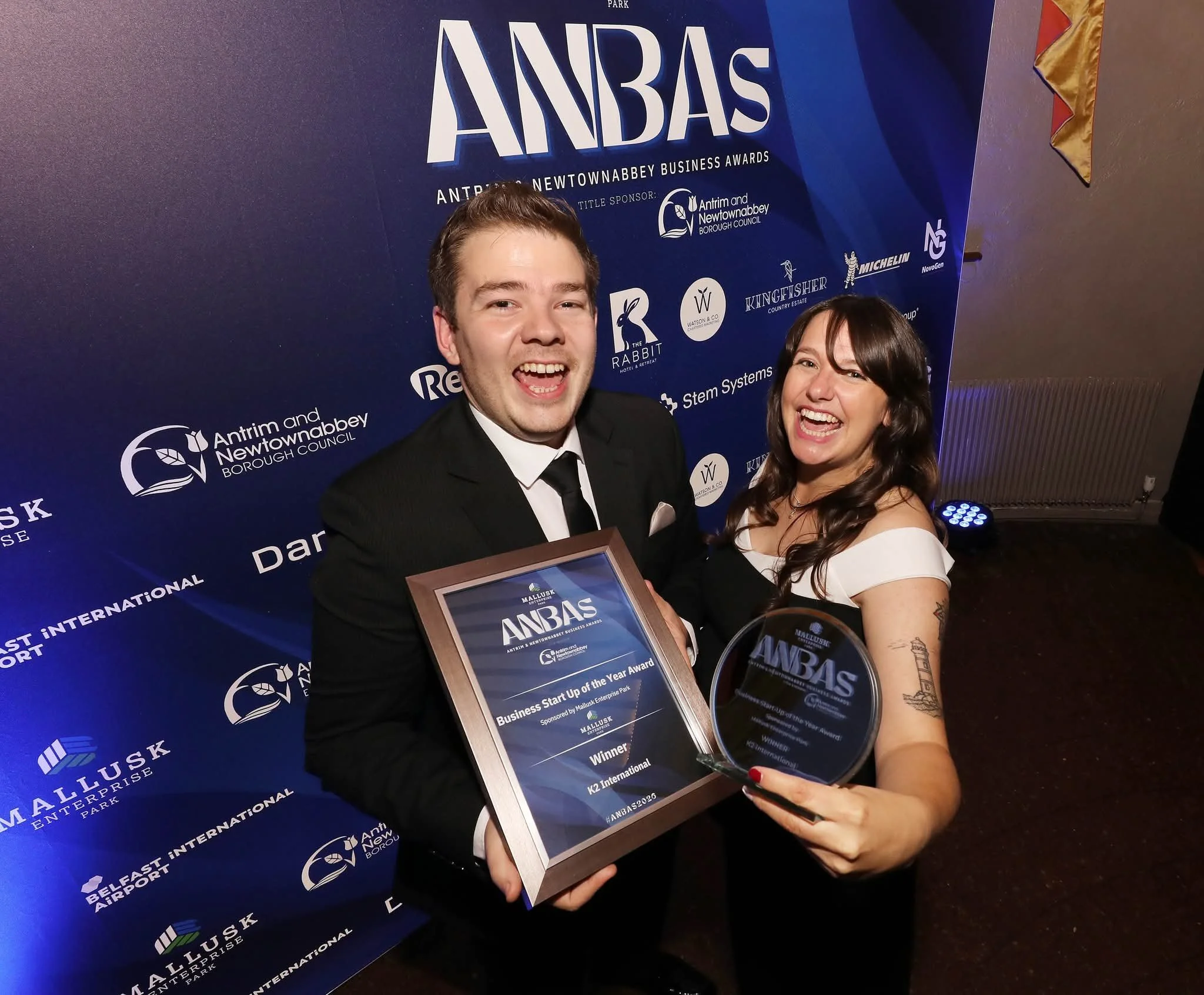
we won business start-up of the year! 🎉🏆
We’re over the moon to announce that K2 International has been awarded Business Start-Up of the Year at the inaugural Antrim and Newtownabbey Business Awards on 1st October! 🎉🏆
This is a huge milestone for us — and a moment we’re incredibly proud of. From day one, our mission has been to raise the standard of first aid and pre-hospital care training across Northern Ireland, and to be recognised so early in our journey means the world to our team. ❤️💙
A massive thank you to our learners, partners and supporters. Your trust, encouragement and belief in what we’re building has helped us achieve something truly special. 🙌
We’re excited for what’s ahead and can’t wait to keep growing, innovating and delivering training that genuinely makes a difference. 🚑✨
View the full list of winners here:




“Absolutely fantastic course, really enjoyed the teaching atmosphere and would 100% recommend to others!”
Cheyenne - FREC 3 graduate
“I returned to K2I-EOC for my FREC 4 and felt very excited for this. Both Michael and Gemma were knowledgable and have massive real life experience. What should have been a daunting experience became an exciting journey. I completed the course feeling inspired and eager to enrol in other courses”
Elaine, FREC 3 and 4 graduate

PLANT AN EXTRA TREE TODAY
PLANT AN EXTRA TREE TODAY


K2 International are proud to announce that we have partnered with Sprout, a global tree planting initiative! This means with every purchase of any of our products or courses a tree will be planted in your honour!
To buy an extra tree to plant, click the link below and help us slowly re-forest the earth one tree at a time!

